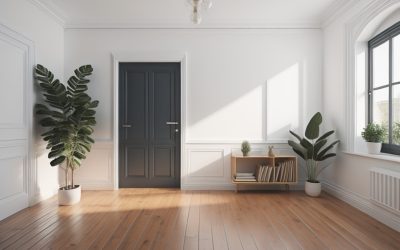
Custom wood doors do not always need the same finish on both sides. Using matching finishes creates continuity, while different interior and exterior finishes can help the door coordinate with two distinct design environments.
For homes in Phoenix, AZ, the decision often depends on exterior architecture, interior finishes, wood species, natural light, and how prominently the door is viewed from each side. The best result is usually the one that makes the door feel intentional both from the street and from inside the home.
When Does the Same Finish on Both Sides Make Sense?
Using one finish throughout can create a cohesive, uninterrupted look.
This works especially well when the exterior and interior share similar materials or color palettes. A home with warm stone outside and natural wood flooring or cabinetry inside may support the same finish on both sides without creating visual conflict.
A consistent finish can also emphasize the character of the wood itself. Instead of treating each face of the door as a separate design element, the door reads as one complete architectural feature.
When Should the Interior and Exterior Finishes Be Different?
Different finishes can make sense when the inside and outside of the home use noticeably different palettes.
For example, the exterior may feature light stucco, dark metal accents, and warm stone, while the interior uses pale walls, lighter wood tones, and a more contemporary style. A single finish may coordinate well with one side but feel too heavy or too light on the other.
Can Two Different Finishes Still Look Cohesive?
Yes.
The two sides do not need to match exactly to feel related. They can share undertones, wood grain, sheen level, hardware, or other design details.
For instance, one side might use a medium brown finish while the other uses a slightly lighter version from the same color family. This creates distinction without making the door feel disconnected.
Edges, jambs, and visible frame components may need to be considered carefully so the finish change does not appear abrupt or unfinished.
How Does Wood Species Affect Finish Options?
Some woods have pronounced grain and natural color variation, while others offer a more uniform surface. These characteristics can change how dramatically the two sides differ once the finish is applied.
A darker stain may intensify grain contrast on one species but appear more even on another. Lighter finishes may highlight natural color variation more clearly.
When selecting custom wood doors, homeowners should consider both the species and the intended finish together rather than choosing them independently.
How Does Sun Exposure Affect the Exterior Finish?
Exterior exposure is an important consideration, especially in Phoenix.
A front door may receive substantial direct sunlight depending on its orientation, porch depth, and surrounding architecture. The exterior finish should therefore be selected with both appearance and exposure in mind.
The interior side usually experiences a very different environment.
It may be shaded, climate-controlled, and viewed under softer lighting. Because of that, the finish that works best outside may not create the same effect inside.
Should the Interior Finish Match Flooring or Cabinetry?
It does not need to match exactly.
An exact match can sometimes make the interior feel overly coordinated. A better approach is often to choose a finish with compatible undertones.
For example, warm wood flooring can work with a slightly deeper or lighter door tone as long as both share similar warm undertones. The same principle applies to cabinetry, ceiling beams, and interior trim.
How Should the Exterior Finish Relate to Stucco and Stone?
Exterior materials should help guide the finish selection, especially on Phoenix homes where stucco, stone accents, masonry, and earth-toned exterior palettes are common.
Light stucco can support medium or darker wood tones that give the entry more visual definition. Stone with brown, rust, cream, or gray undertones may work well with wood finishes that relate naturally to those colors without matching them exactly.
If the exterior already contains several bold materials or strong architectural details, a quieter wood finish may create better balance.
Does Sheen Matter as Much as Color?
Yes.
Two finishes with similar color can look very different depending on sheen.
A lower-sheen finish tends to create a softer, more natural appearance, while a glossier surface reflects more light and can emphasize color depth.
A wood finish viewed in bright Phoenix sunlight may appear lighter, warmer, or more reflective than it does indoors. Interior lighting can also change how the grain and color are perceived.
Should Hardware Match on Both Sides?
Hardware does not necessarily need to be identical on both sides, but it should relate visually.
The exterior may use a substantial pull or decorative handle, while the interior side may have a simpler operating component. Even when the forms differ, using compatible finishes can help maintain continuity.
How Should Phoenix Homeowners Decide?
Start by viewing the door as part of two separate spaces.
Outside, consider stucco, stone, windows, roof materials, landscaping, and sun exposure. Inside, look at flooring, cabinetry, walls, furniture, lighting, and other wood elements.
If one finish works naturally in both settings, keeping the door consistent can create a unified appearance. If the two environments are significantly different, separate finishes may produce a more balanced result.